Same picture: you see a volcano, the system sees words
An AI system does not look at a picture the way you do. It splits the image into small cells and guesses each one, keeping a confidence score as it goes. The blank areas are where the system was not confident enough to answer, and that is the most valuable information of all, which most systems throw away.
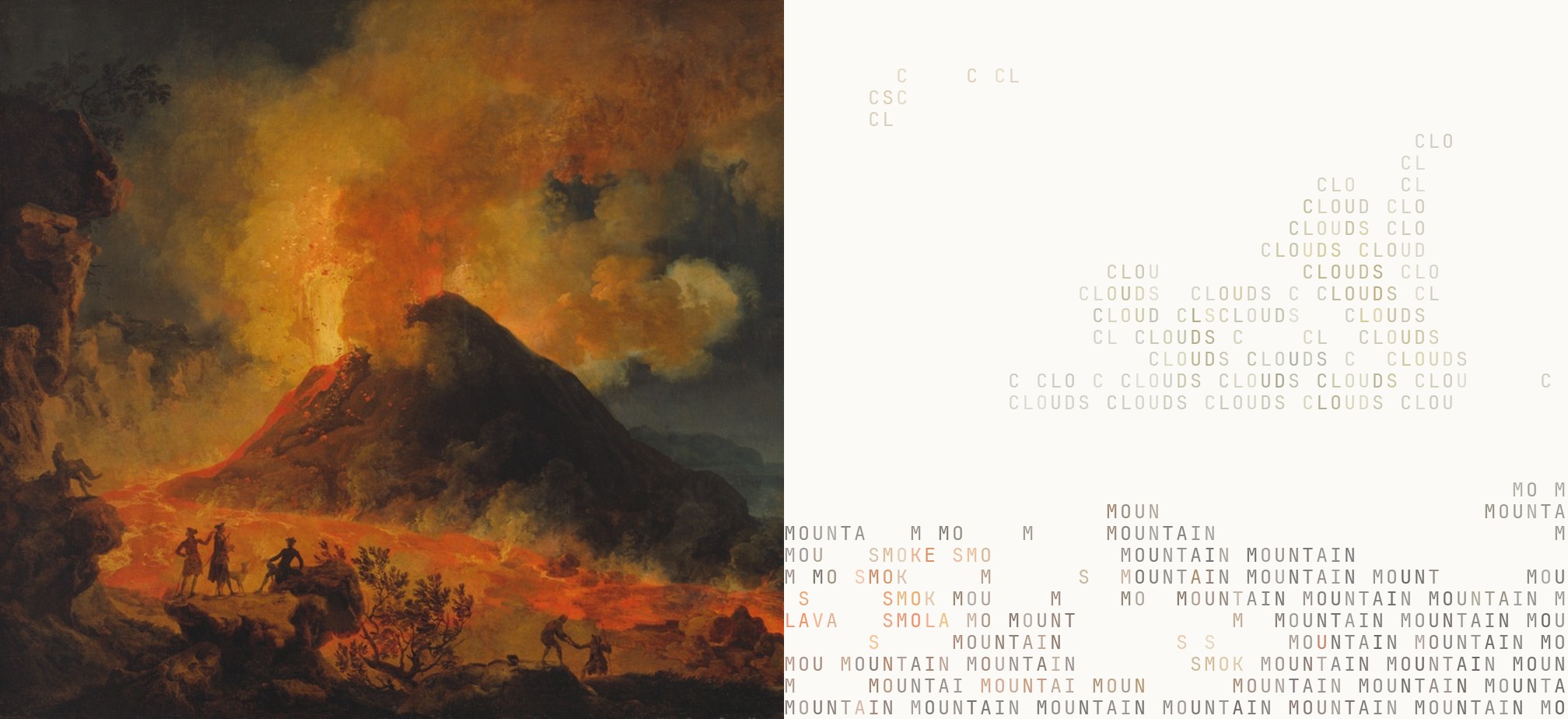
An AI system does not "look at a picture" the way you do. It splits the image into small cells and answers what each cell is most likely to be: lava, smoke, mountain or cloud. It also keeps how confident it is about every cell.
The most interesting part is the large blank areas, in the sky and in the middle of the picture. They are not decoration. They are where the system was not confident enough to name anything, so it chose not to answer.
This uncertainty is the most valuable information in the whole process, and it is usually thrown away, because most systems are designed to finish the guess rather than admit they don't know.
Why this matters for a system you hire someone to build
So the systems I build are willing to say they are not sure and pass the case to a person, instead of guessing wrong quietly for you to find later. A clear example is reading documents. Any field the system is not confident about gets marked for a person to check, instead of a made-up number going into your accounts unnoticed.